Crazing looks like a fine web of cracks across the surface of an opal, and once it appears it does not go away. The frustrating part is that it is almost never caused by a single dramatic accident. It usually comes from small, repeated conditions: a sealed drawer, a hot windowsill, a sachet of silica gel, a move from a steamy bathroom to an air-conditioned bedroom. None of those feel dangerous at the time. Over months and years, though, they pull moisture out of the stone faster than it can adjust.
The good news is that nearly every cause of crazing is a habit, and habits can be changed. What follows are the mistakes worth correcting first.
Opal Is a Hydrated Gemstone, Not a Permanent One
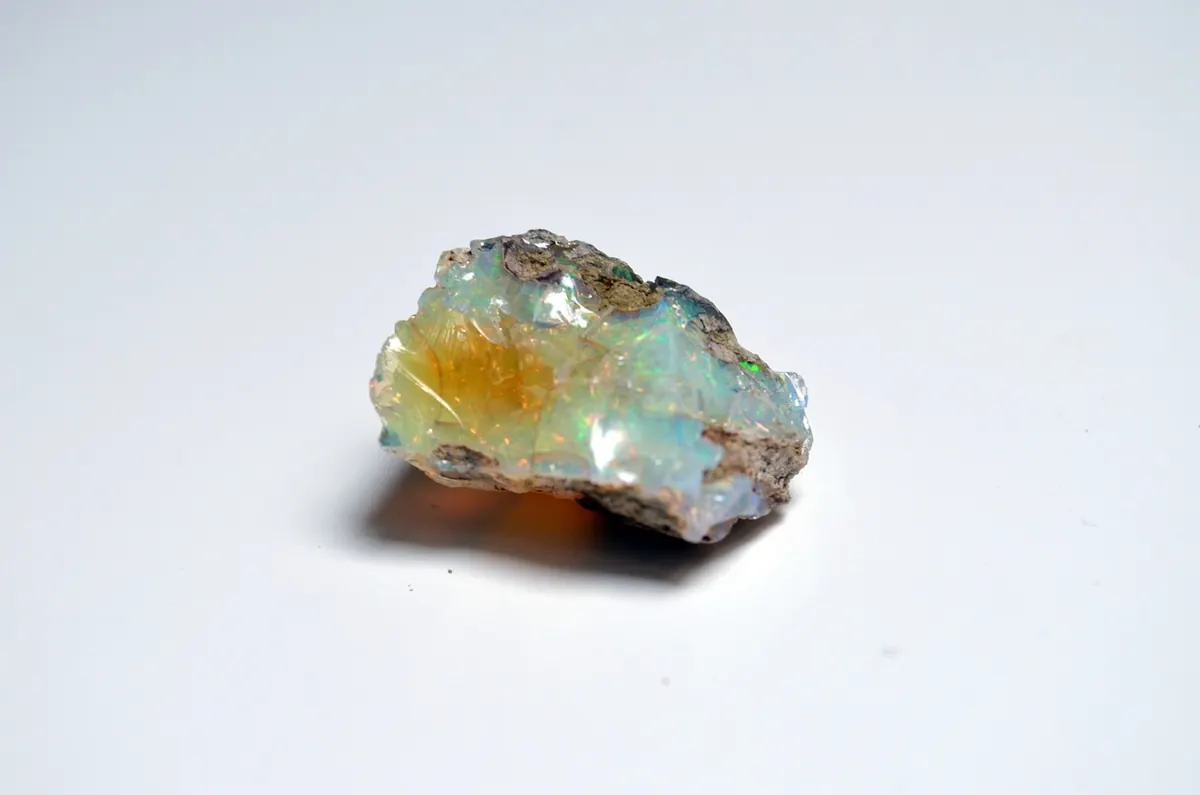
Opal is silica with water built into its structure, usually somewhere between three and ten percent, and considerably more in some material. That water is not a coating or a residue. It sits in the gaps between the microscopic silica spheres that create play-of-colour. Remove it too quickly and the surface layer shrinks before the interior does. The stone cannot stretch to absorb the difference, so it releases the stress as a network of hairline fractures. That is crazing.
Stability is a spectrum, not a guarantee. Two stones cut from the same seam can behave quite differently.
Australian sedimentary opal from Lightning Ridge or Coober Pedy has a strong reputation for steadiness, but "reputed stable" is not the same as indestructible. Ethiopian opal, much of it volcanic in origin and far more porous, reacts faster and more visibly. Treated material — sugar-and-acid, smoked, or assembled — behaves differently again. Treat every opal as a stone that prefers consistency, and you will not go far wrong.
Mistake One: Storing Opals Somewhere Dry and Forgotten
This is the most common route to a crazed stone. Opals get put away "somewhere safe" and then left alone for years in conditions that quietly dehydrate them. A bank safe deposit box is the classic example: sealed, unheated, unhumidified, and opened twice a year. The stone sits in dry air with nothing to buffer it.
Places that are worse than people expect:
- A sealed tub with silica gel, which keeps pulling moisture out of everything inside it.
- A container of dry rice, borrowed from the phone-drying trick.
- A cupboard next to a dehumidifier, or above a boiler.
- A display case in a room with central heating and no humidity control.
- A windowsill, where sun and dry indoor air work together.
- A safe or gun cabinet with a heating rod installed to prevent rust.
Opals do well in roughly the conditions people find comfortable: moderate, fairly steady humidity, no blast of hot dry air, no direct sun. A closed jewellery box in a living area usually does the job. Collectors who keep several loose stones often use a small lidded container with a scrap of slightly damp cotton wool tucked into one corner, not touching the stones, and check that the cotton has not dried out. If you try this, use plain water with nothing added, and keep assembled stones out of that container entirely.
Mistake Two: Exposing Opals to Temperature Shocks
Opal tolerates steady warmth better than it tolerates fast change. A stone that has sat in a cool room and is then placed on a hot dashboard, held under a hairdryer, or moved from a heated interior into freezing air is being asked to expand and contract unevenly. The surface and the interior disagree, and the surface loses.
Watch for the ordinary culprits: a glovebox in summer, the shelf above a radiator, the top of a refrigerator, a sunny windowsill in the afternoon, a sauna or hot tub, and a towel on hot sand. Water temperature matters too. Never rinse an opal in hot water, and never move it straight from a warm room into cold water. Travel is another risk point. A stone packed in an outside pocket of luggage on a winter flight can experience a sharp drop; keep jewellery in your cabin bag, wrapped and padded.
Mistake Three: Cleaning With the Wrong Products
Opal sits at roughly 5.5 to 6.5 on the Mohs scale, softer than the quartz dust on a windowsill and far softer than the diamond in the ring next to it. It also dislikes chemicals. Ultrasonic and steam cleaners, ammonia, bleach, vinegar, toothpaste, and commercial jewellery dip can all dull a surface or attack the bond in an assembled stone.
A safer routine:
- Fill a bowl with lukewarm water and one drop of mild dish soap. Work over the bowl, never over an open drain.
- Use a soft brush — a baby toothbrush or a makeup brush — with light strokes.
- Rinse in clean lukewarm water, then pat dry with a soft cloth.
- Let the stone air dry completely before it goes back into storage.
- Skip overnight soaking, and skip the ultrasonic machine at the jeweller unless you have confirmed the stone is untreated solid opal and the jeweller knows it.
Mistake Four: Treating Doublets, Triplets, and Hydrophane Opal Like Solid Stone
A doublet is a thin slice of opal glued to a backing; a triplet adds a clear cap on top. Water is the enemy of that glue line, and heat softens the adhesive. Never soak a doublet or triplet, never store one in a humid container, and wipe it with a barely damp cloth before drying it straight away. If the layers begin to lift or cloud, a jeweller or lapidary may be able to help, but prevention is far simpler.
Hydrophane opal, much of it Ethiopian, absorbs water readily. It can look nearly transparent when wet and milky when dry, which alarms owners who have not seen it before. If a hydrophane stone gets soaked, dry it slowly — in a closed container at room temperature, away from heaters and sun — rather than forcing the process. And keep oil away from all porous opal. Oil can seep in and darken or stain the stone in ways that cannot be undone.
Mistake Five: Jumbled Boxes and Careless Wear
An opal in a drawer with loose chains, quartz beads, or a diamond ring will collect scratches that look like crazing and are sometimes mistaken for it. Give each piece its own soft pouch or compartment. Rings come off for gardening, gym sessions, moving furniture, and the beach. Settings deserve a glance twice a year; a loose prong or a worn bezel leaves a stone exposed to knocks it would otherwise survive.
Reading the Warning Signs Early
Fine lines that catch a fingernail, a faint cloudy patch, or a shift in the way light moves across the surface are worth investigating promptly. Photograph the stone in daylight when you buy it — a clear reference makes small changes obvious later. If crazing has begun, do not oil or seal it, and do not expose it to more heat or dry air. Keep conditions stable and have a jeweller or lapidary look at it. Crazing cannot be reversed, though a lightly affected stone can sometimes be repolished, since the cracks often run deeper than they appear.
A Care Routine You Can Actually Keep
Nothing here requires special equipment. It requires consistency, which is the one thing opals genuinely ask for.
- Choose one storage spot with moderate, stable humidity and keep stones there.
- Wear your opals. Regular wear keeps them out of dry drawers and in contact with ambient moisture.
- Store each piece separately in a soft pouch, away from harder gems.
- Clean with lukewarm water and mild soap only, then dry fully.
- Inspect twice a year, and photograph new purchases.
- Travel with opals in your cabin bag, padded, never in a hot or freezing hold.
Do those things and your opal has a very good chance of looking exactly as it does today in twenty years' time. Miss them, and the stone will tell you — quietly, in fine lines, long before you notice anything else.
Photo: stevepb / Pixabay